Restore your comfortable fit
Denture Relines
Your mouth changes shape over time — your denture should keep up. A professional reline restores a snug, comfortable fit without the cost of a full replacement.
Why dentures lose their fit — and how a reline fixes it
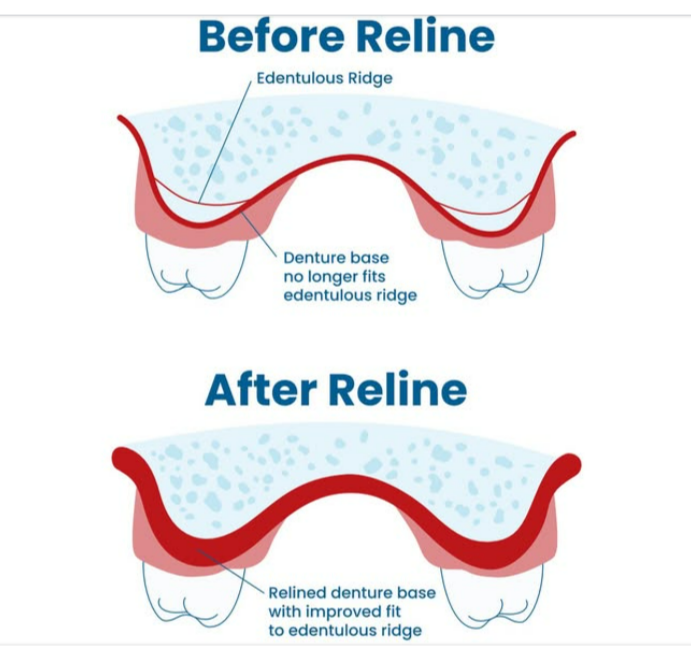
After tooth loss, the jawbone and gum tissue gradually resorb and change shape. This is a natural process, but it means that a denture that fit perfectly when it was made will eventually feel loose, rock, or cause sore spots. Most patients notice a significant change in fit within 2–5 years of receiving a new denture.
A denture reline adds new material to the fitting surface of your existing denture, reshaping it to match your current gum contours. It is one of the most cost-effective ways to extend the life of your denture and restore the comfort and confidence you had when it was new. Dr. Min S. Kim performs both chairside and laboratory relines at all three of our Washington locations.
Types of denture relines
Chairside reline
Same-dayA chairside reline is completed in a single appointment using a soft or hard relining material applied directly to your denture while you wear it. The material sets to the exact shape of your gums, improving fit immediately. Ideal for patients with minor fit changes or those who cannot be without their denture overnight.
Laboratory reline
Most durableA lab reline uses precise impressions taken in-office, which are then used to rebase the denture in our on-site lab with a hard acrylic material. The result is a more durable, precisely fitted surface than a chairside reline. Your denture is typically returned the same day or next day thanks to our in-house lab.
Soft reline
Gentle on sensitive gumsA soft reline uses a pliable, cushioning material rather than hard acrylic — ideal for patients with tender or sensitive gum tissue, bony ridges, or those who find hard denture bases uncomfortable. Soft relines require more frequent replacement than hard relines but provide exceptional comfort.
Signs you may need a reline
- Your denture feels loose or shifts when you eat or speak
- You are using more denture adhesive than you used to
- You have developed new sore spots or pressure areas
- Your denture clicks or moves when you chew
- It has been 2 or more years since your last reline
- Your bite feels uneven or your face looks more sunken
What to expect at your reline appointment
Assessment
Dr. Kim examines your denture and gum tissue to determine which type of reline is most appropriate for your situation and confirms the expected outcome.
Impressions or chairside application
For a lab reline, precise impressions are taken inside your existing denture. For a chairside reline, relining material is applied directly and you bite into it to capture your exact gum contours.
Lab processing (lab reline only)
Your denture is processed in our on-site lab, where the new fitting surface is trimmed, polished, and quality-checked by Dr. Kim before return.
Fit check & adjustments
You try the relined denture in-office. Any pressure points or bite adjustments are addressed on the spot before you leave.
Frequently asked questions
Loose denture? Let's fix that.
Schedule a reline assessment at any of our three locations. Most relines are completed the same day in our in-house lab.