Maxillofacial prosthetics
Obturator Prosthetics
Custom-fabricated obturators that close palatal defects after maxillectomy or other upper jaw surgery — restoring speech, eating, and quality of life. Designed and fitted by Dr. Min S. Kim, Maxillofacial Prosthetist/Denturist.
Obturator prosthetics
What is an obturator?
An obturator is a custom-fabricated prosthetic device that closes a defect in the palate or upper jaw — separating the oral and nasal cavities and restoring the patient's ability to speak, eat, and drink. The word comes from the Latin obturare, meaning "to stop up" or "to close."
Obturators are most commonly needed following maxillectomy (surgical removal of part or all of the upper jaw), but they are also used for patients with cleft palate, palatal fistulas, or other acquired or congenital defects of the palate. Dr. Min S. Kim fabricates obturators at every stage of the patient's treatment — from the operating room through long-term rehabilitation.

Types of obturators
Surgical obturator
Placed at time of surgeryFabricated before surgery and placed immediately in the operating room after resection. The surgical obturator holds surgical packing in place, provides an immediate separation of oral and nasal cavities, and allows the patient to speak and swallow in the early post-operative period.
Interim obturator
Weeks 1–6 post-surgeryReplaces the surgical obturator as the surgical site heals and changes shape. The interim obturator is adjusted and relined at regular intervals to accommodate tissue changes during the healing phase, typically over the first 3–6 months after surgery.
Definitive obturator
Long-term prosthesisFabricated once the surgical site has fully healed and stabilized — typically 6–12 months after surgery. The definitive obturator is a precision-fitted, durable prosthesis designed for long-term use, providing optimal speech, function, and aesthetics.
What an obturator restores
Intelligible speech
By closing the palatal defect, the obturator restores the pressure needed for normal speech sounds, dramatically improving speech clarity and reducing hypernasal resonance.
Normal eating and drinking
Patients can eat and drink without food or liquid passing into the nasal cavity, enabling a near-normal diet and significantly improving nutrition and quality of life.
Facial contour support
The obturator supports the cheek and lip tissues, preventing the facial collapse that can occur after maxillectomy and maintaining a more natural facial appearance.
Nasal hygiene
Separating the oral and nasal cavities reduces the accumulation of food debris in the nasal passage and simplifies daily hygiene management for the patient.
Psychological wellbeing
Restoring the ability to speak, eat, and appear more normal in social situations has a profound positive impact on confidence and emotional recovery after cancer surgery.
Coordinated oncology care
Dr. Kim collaborates with your surgical and oncology team from pre-surgical planning through definitive rehabilitation, ensuring seamless, coordinated care at every stage.
Obturator — frequently asked questions
Maxillectomy rehabilitation
What is a maxillectomy?
A maxillectomy is the surgical removal of part or all of the maxilla — the upper jaw bone that forms the roof of the mouth, the floor of the nasal cavity, and part of the cheek. It is most commonly performed to treat cancers of the oral cavity, nasal cavity, or paranasal sinuses, but may also be required for aggressive benign tumors or severe osteonecrosis.
The extent of the surgery depends on the size and location of the tumor. A partial maxillectomy removes a portion of the upper jaw, while a total maxillectomy removes the entire maxilla on one side. In some cases, the orbit (eye socket) is also involved. The resulting defect significantly affects speech, swallowing, facial appearance, and quality of life — making prosthetic rehabilitation a critical part of the overall treatment plan.
Types of maxillectomy defects
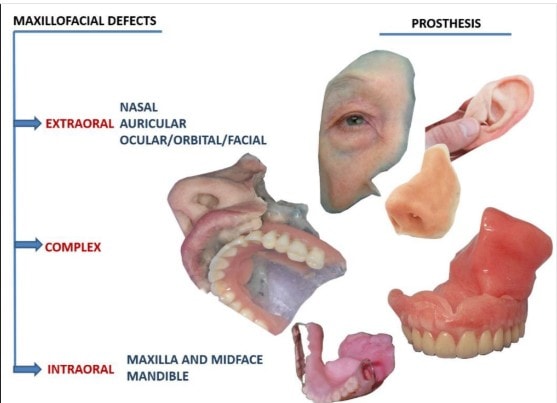
Maxillectomy defects are classified by their extent — from limited palatal defects to total maxillectomy with orbital involvement. The type of obturator and rehabilitation approach is tailored to the specific defect class.
Limited (infrastructure) maxillectomy
Removal of the lower portion of the maxilla below the floor of the nasal cavity. The palate is partially or fully removed. Speech and swallowing are significantly affected. An obturator is the primary rehabilitation approach.
Subtotal maxillectomy
Removal of most of the maxilla, including the palate, lateral wall, and floor of the orbit, while preserving the orbital contents. Requires a more extensive obturator and may involve additional facial prosthetics.
Total maxillectomy
Removal of the entire maxilla on one side, including all teeth on that side and the full palate. The most extensive defect — requires a comprehensive obturator and often additional prosthetic support for the cheek and lip.
Total maxillectomy with orbital exenteration
Removal of the entire maxilla plus the orbital contents (eye and surrounding tissue). Requires both an obturator for the palatal defect and an orbital prosthesis for the eye socket — both fabricated and coordinated by Dr. Kim.
Your rehabilitation journey
Pre-surgical consultation
Dr. Kim meets with you before surgery to take impressions, review imaging, coordinate with your surgical and oncology team, and fabricate the surgical obturator in advance so it is ready at the time of your operation.
Surgical obturator placement
The surgical obturator is placed in the operating room immediately after resection. It holds packing, separates the oral and nasal cavities, and allows you to begin speaking and swallowing in the early post-operative period.
Interim obturator and healing adjustments
As your surgical site heals and changes shape over the first several months, Dr. Kim adjusts and relines your interim obturator at regular appointments to maintain a comfortable, functional fit throughout the healing phase.
Definitive obturator fabrication
Once your tissue has fully stabilized — typically 6–12 months after surgery — precise impressions are taken for your definitive obturator, fabricated in our in-house lab for optimal fit, function, and durability.
Long-term follow-up and coordination
Regular follow-up appointments monitor the fit of your obturator, the health of the surrounding tissue, and any changes that may require adjustment. Dr. Kim also coordinates with your oncology team for ongoing surveillance and any additional prosthetic needs.
Maxillectomy — frequently asked questions
About Dr. Min S. Kim
Maxillofacial Prosthetist/Denturist — King's College London — 40,000+ patients treated
We are here to support your recovery
Whether you are preparing for surgery or already in recovery, Dr. Kim and our team are ready to help. Contact us at any of our three Washington locations.