
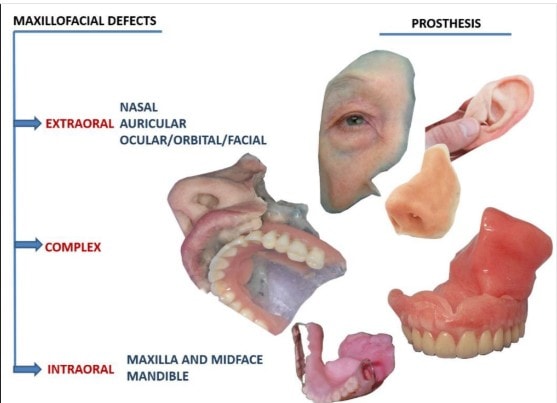
Maxillofacial prosthetics
Ocular Prosthetics
Custom-crafted ocular prostheses that restore a natural appearance and support the health of the eye socket following enucleation, evisceration, or congenital absence of the eye — designed and fitted by Dr. Min S. Kim at our Washington clinics.
What is an ocular prosthesis?
An ocular prosthesis — commonly called a prosthetic eye or artificial eye — is a custom-made shell worn inside the eye socket to restore a natural, symmetrical appearance after the loss of an eye. Modern ocular prostheses are crafted from high-quality acrylic and hand-painted to match the iris color, pupil size, and vascular detail of the fellow eye with remarkable precision.
Dr. Min S. Kim brings dual credentials in maxillofacial prosthetics and prosthodontics to every ocular case. Each prosthesis is individually designed, fitted, and polished at our in-house lab — ensuring the closest possible match to your natural eye and a comfortable, well-supported fit within the socket.

Who needs an ocular prosthesis?
Enucleation
Surgical removal of the entire eye — most commonly due to ocular melanoma, severe trauma, or end-stage glaucoma — leaves a socket that requires a custom prosthesis to maintain volume, support the eyelids, and restore appearance.
Evisceration
Removal of the eye's internal contents while preserving the scleral shell and extraocular muscles. A prosthesis fitted over the remaining tissue provides excellent motility and a natural look.
Phthisis bulbi
A shrunken, non-functional eye resulting from injury or disease can be covered with a custom prosthetic shell, restoring appearance without requiring surgical removal of the remaining tissue.
Congenital anophthalmia
Children born without one or both eyes benefit from early prosthetic fitting to stimulate socket growth, support facial development, and allow participation in normal childhood activities.
Severe ocular trauma
Injuries that result in an unsalvageable eye — from accidents, industrial incidents, or military service — are addressed with a prosthesis that restores a natural appearance and protects the socket.
Orbital tumors and cancer
Patients who have undergone orbital exenteration or enucleation as part of cancer treatment can receive a prosthesis — or a combined orbital prosthesis — to restore facial symmetry and support quality of life.
What an ocular prosthesis provides
Natural appearance
Hand-painted to match your fellow eye's iris color, pupil size, and surface vascularity, a well-crafted ocular prosthesis is virtually indistinguishable from a natural eye in everyday social settings.
Socket health
A properly fitted prosthesis maintains socket volume, prevents contracture of the conjunctival fornices, and supports the eyelids — preserving long-term socket health and the ability to wear a prosthesis comfortably for life.
Eyelid support and movement
Custom prostheses are shaped to support the upper and lower eyelids naturally. When fitted over an evisceration implant with intact muscles, the prosthesis moves in coordination with the fellow eye.
Comfortable daily wear
Polished to a smooth finish and fitted precisely to your socket anatomy, a well-made prosthesis can be worn comfortably throughout the day with minimal awareness of its presence.
Psychological wellbeing
Restoring a natural facial appearance after eye loss has a profound positive impact on confidence, social engagement, and emotional recovery — for both adults and children.
Long-term durability
High-quality acrylic prostheses are durable and long-lasting. With proper care and periodic polishing, a prosthesis typically serves well for several years before replacement is needed.
Your fitting journey
Initial consultation and socket assessment
Dr. Kim evaluates your socket anatomy, tissue health, and any existing implant to determine the optimal prosthesis design. Timing after surgery is discussed — most patients are ready for fitting 6–8 weeks post-operatively once the socket has healed.
Impressions and custom fabrication
A precise impression of your socket is taken to create a prosthesis that fits your unique anatomy. The acrylic shell is fabricated in our in-house lab, shaped to support the eyelids and maximize comfort.
Iris painting and color matching
Dr. Kim hand-paints the iris and pupil to match your fellow eye, replicating color, pattern, and surface blood vessel detail. This meticulous process is what gives a custom prosthesis its lifelike appearance.
Fitting, adjustment, and final polish
The prosthesis is placed and evaluated for fit, comfort, eyelid support, and symmetry. Adjustments are made chairside until the result is optimal. The prosthesis is then polished to a smooth, comfortable finish.
Care instructions and follow-up
You receive detailed instructions on daily cleaning, insertion and removal technique, and when to return for polishing or replacement. Regular follow-up appointments monitor socket health and prosthesis condition.
Caring for your ocular prosthesis
Daily cleaning
Remove the prosthesis nightly and clean it with mild soap and warm water. Avoid alcohol-based cleaners, which can damage the acrylic surface.
Socket hygiene
Rinse the socket with sterile saline or artificial tears daily. Keep the socket clean and watch for signs of discharge or irritation.
Periodic polishing
Return to our clinic every 6–12 months for professional polishing. Over time the surface develops micro-scratches that increase discharge and discomfort; polishing restores comfort and appearance.
Replacement timeline
Most prostheses are replaced every 3–5 years as socket anatomy changes and the prosthesis surface wears. Children may need more frequent replacement to accommodate growth.
Frequently asked questions
About Dr. Min S. Kim
Maxillofacial Prosthetist/Denturist — King's College London — 40,000+ patients treated
Restore your appearance. Reclaim your confidence.
Our team is ready to guide you through every step of the ocular prosthetics process — from your first consultation to long-term care. Contact us at any of our three Washington locations.