
Hearing health & tinnitus
Tinnitus & Hearing Loss
Tinnitus — the perception of ringing, buzzing, or hissing in the ears — affects nearly 50 million Americans and is closely linked to hearing loss. Understanding the connection is the first step toward relief.
What is tinnitus?
Tinnitus is the experience of sound — ringing, buzzing, hissing, clicking, or roaring — that has no external source. It is not a disease itself but a symptom, most commonly of underlying hearing loss, noise exposure, or changes in the auditory system.
For many people tinnitus is a minor nuisance. For others it is persistent and distressing, interfering with sleep, concentration, and quality of life. The good news: effective management strategies exist, and treating associated hearing loss often brings significant relief.
Types of tinnitus
Subjective tinnitus
Most commonSound heard only by the patient — the vast majority of tinnitus cases. Usually caused by damage to the outer, middle, or inner ear or the auditory nerve.
Objective tinnitus
RareSound that can also be heard by a clinician using a stethoscope. Often caused by blood vessel problems, muscle contractions, or middle ear bone conditions.
Pulsatile tinnitus
Vascular originA rhythmic sound that pulses in time with the heartbeat. May indicate a vascular condition and warrants prompt medical evaluation.
Common causes & triggers
Noise-induced hearing loss
Prolonged exposure to loud noise — occupational, recreational, or sudden — is the leading cause of both tinnitus and permanent hearing loss.
Age-related hearing loss
Presbycusis, the gradual hearing decline that comes with aging, is frequently accompanied by tinnitus as the auditory system changes.
Earwax blockage
A buildup of cerumen can irritate the eardrum and alter pressure in the ear canal, triggering or worsening tinnitus.
Medications
Certain antibiotics, diuretics, aspirin in high doses, and some cancer medications are ototoxic and can cause or intensify tinnitus.
Head or neck injuries
Trauma affecting the inner ear, auditory nerve, or brain regions that process sound can produce tinnitus, sometimes in only one ear.
Stress & anxiety
While not a direct cause, stress and anxiety are well-documented tinnitus triggers that can make existing tinnitus significantly louder and more intrusive.
Managing tinnitus
There is currently no universal cure for tinnitus, but a range of evidence-based strategies can reduce its impact dramatically. For the majority of patients with co-existing hearing loss, hearing aids are the single most effective intervention.
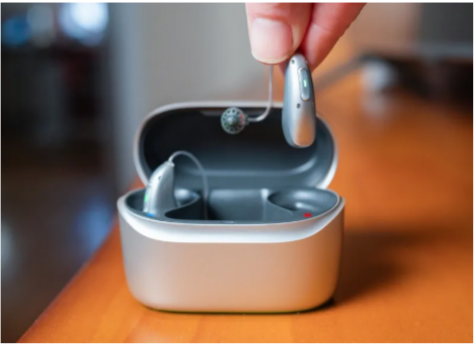
Modern hearing aids amplify the environmental sounds that tinnitus tends to mask, reducing the contrast that makes tinnitus so noticeable. Many devices also include dedicated sound therapy programs — gentle background sounds that help the brain habituate to tinnitus over time.
Hearing aids with sound therapy
Amplification restores missing sound and reduces the 'silence' in which tinnitus is most prominent. Built-in sound generators provide additional masking and habituation support.
Sound masking
White noise machines, nature sounds, or low-level music can provide background sound that makes tinnitus less noticeable, especially at night.
Tinnitus retraining therapy (TRT)
A structured program combining sound therapy with counseling to help the brain reclassify tinnitus as a neutral, ignorable signal.
Cognitive behavioural therapy (CBT)
CBT addresses the emotional and psychological response to tinnitus, reducing distress and improving coping — with strong evidence from clinical trials.
50M
Americans experience tinnitus
90%
of tinnitus cases involve hearing loss
80%
of patients find relief with hearing aids
Frequently asked questions

Jieun Kim HIS
Licensed Hearing Instrument Specialist
Jieun specializes in tinnitus consultations and hearing aid fittings with built-in sound therapy. She takes time to understand each patient's experience and build a management plan that fits their life.
Find relief from tinnitus
A hearing evaluation is the starting point for understanding and managing tinnitus. Book yours at any of our three Washington locations.