
Hearing aid technology
Types of Hearing Aids
Modern hearing aids come in a wide range of styles, sizes, and technology levels. Understanding the options helps you choose a device that fits your hearing needs, lifestyle, and personal preferences.
Finding the right fit for you
No two people experience hearing loss the same way — and no single hearing aid suits everyone. The right device depends on the degree and type of your hearing loss, the shape of your ear canal, your dexterity, your daily activities, and the features that matter most to you.
At Comfy Denture & Hearing Clinic, Jieun Kim HIS takes the time to evaluate your hearing and lifestyle before recommending a style. Below is an overview of the main hearing aid types available today.
Hearing aid styles
Behind-the-Ear (BTE)
Most versatileThe main electronics sit in a small case behind the ear, connected to a custom earmold or dome in the ear canal via a thin tube. BTEs suit virtually all degrees of hearing loss and are easy to handle — ideal for those with dexterity challenges.
- Suits mild to profound loss
- Easy to clean and handle
- Long battery life
- Compatible with telecoils
Receiver-in-Canal (RIC / RITE)
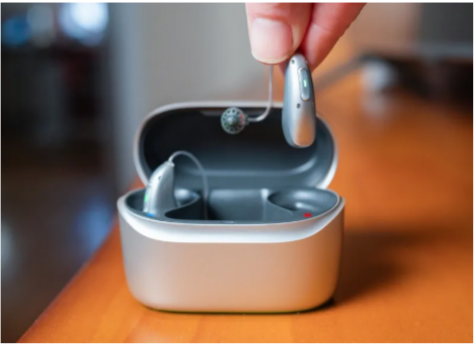
Most popularSimilar to BTE but with the speaker (receiver) placed directly in the ear canal via a thin wire, making the behind-the-ear unit smaller and more discreet. RIC devices offer excellent sound quality and are the most widely fitted style today.
- Very discreet profile
- Natural sound quality
- Suits mild to severe loss
- Easy to upgrade receiver
In-the-Ear (ITE)
Custom fitCustom-made to fill the outer bowl of the ear. ITEs are larger than canal styles, making them easier to insert and adjust — a good choice for people who want custom fit without the very small size of IIC or CIC devices.
- Custom shell for comfort
- Easier to handle
- Directional microphones
- Suits mild to severe loss
In-the-Canal (ITC)
DiscreetSmaller than ITE, sitting partly in the ear canal. ITCs balance discretion with ease of use and can include features like volume controls and directional microphones.
- More discreet than ITE
- Custom fit
- Some manual controls
- Suits mild to moderate loss
Completely-in-Canal (CIC)
Very discreetFits almost entirely inside the ear canal, making it nearly invisible. CICs are custom-made and use the ear's natural shape to reduce wind noise. Best for mild to moderate hearing loss.
- Nearly invisible
- Reduced wind noise
- Natural sound localization
- Custom fit
Invisible-in-Canal (IIC)
Most discreetThe smallest custom hearing aid available, sitting deep in the second bend of the ear canal and completely invisible when worn. IICs suit mild to moderate hearing loss and those who prioritize cosmetic discretion above all else.
- Completely invisible
- Deep canal placement
- Reduced occlusion effect
- Natural sound quality
Key features to consider
Noise reduction
Advanced digital processing identifies and reduces background noise, making speech clearer in restaurants, crowds, and other challenging environments.
Directional microphones
Automatically focus on sound coming from in front of you — the direction of most conversations — while reducing noise from other directions.
Bluetooth connectivity
Stream audio directly from smartphones, TVs, and other devices. Many modern aids connect seamlessly to iOS and Android for hands-free calls and media.
Rechargeable batteries
Lithium-ion rechargeable aids eliminate the need for tiny disposable batteries. A full charge typically provides a full day of use including streaming.
Tinnitus sound therapy
Built-in sound generators provide gentle masking sounds to help manage tinnitus alongside hearing loss — no separate device needed.
Telecoil (T-coil)
Picks up magnetic signals from loop systems in theatres, churches, and public venues for clearer sound without background noise.
How we find your perfect match
Comprehensive hearing evaluation
We assess your hearing across frequencies and speech understanding to build a precise picture of your hearing profile.
Lifestyle & preference discussion
We talk through your daily activities, environments, dexterity, cosmetic preferences, and technology comfort to narrow the options.
Device demonstration
We demonstrate shortlisted styles in the clinic so you can experience the fit, feel, and sound quality before committing.
Custom fitting & programming
Your chosen device is fitted and programmed precisely to your audiogram, then fine-tuned based on your real-world feedback.
Follow-up & ongoing support
We schedule follow-up appointments to adjust programming as your ears adapt, and provide ongoing cleaning, repairs, and support.
Explore more hearing care topics
Frequently asked questions
Ready to explore your options?
Schedule a hearing evaluation at any of our three Washington locations and let us help you find the hearing aid that fits your life.